
Human-Dog Attachment & Aging The Science Behind The Law
Peer-reviewed science on bonding, emotional regulation, and lifelong companionship - the research foundation of HB4540.

Human–Dog Attachment & Aging: The Science of Bonding
The relationship between humans and dogs is a deeply integrated emotional and biological system. Research shows that dogs form attachment bonds with humans similar to those seen in caregiver–child relationships. These bonds become especially significant in older dogs, where emotional regulation and mutual dependence increase. As dogs age, this relationship deepens — shifting from activity-based interaction to mutual regulation, trust, and presence.
Key Findings from the Research
Six interconnected areas of peer-reviewed science explain why caregiving history and animal well-being must be considered in companion-animal custody decisions.

Attachment as a Regulatory System
Dogs use humans as a secure base - a source of safety and stability. This attachment system regulates stress, fear, and exploration. In older dogs: increased reliance on familiar humans, reduced exploration, greater proximity-seeking, and heightened sensitivity to routine changes.

Co-Regulation: A Shared Emotional System
Humans and dogs mutually influence each other's emotional states. Dogs read human facial expressions and tone; humans respond to canine body language. Over time, both develop synchronized emotional patterns. In older dogs, this system becomes quieter but more refined - less about activity, more about presence.

The Role of Oxytocin
Oxytocin - the bonding hormone - plays a central role in human-dog attachment. Eye contact, touch, and interaction increase oxytocin levels in both species, strengthening emotional bonds, reducing stress, and enhancing social connection. In aging dogs, oxytocin contributes more to comfort and emotional stability.
Aging, Cognition & Attachment
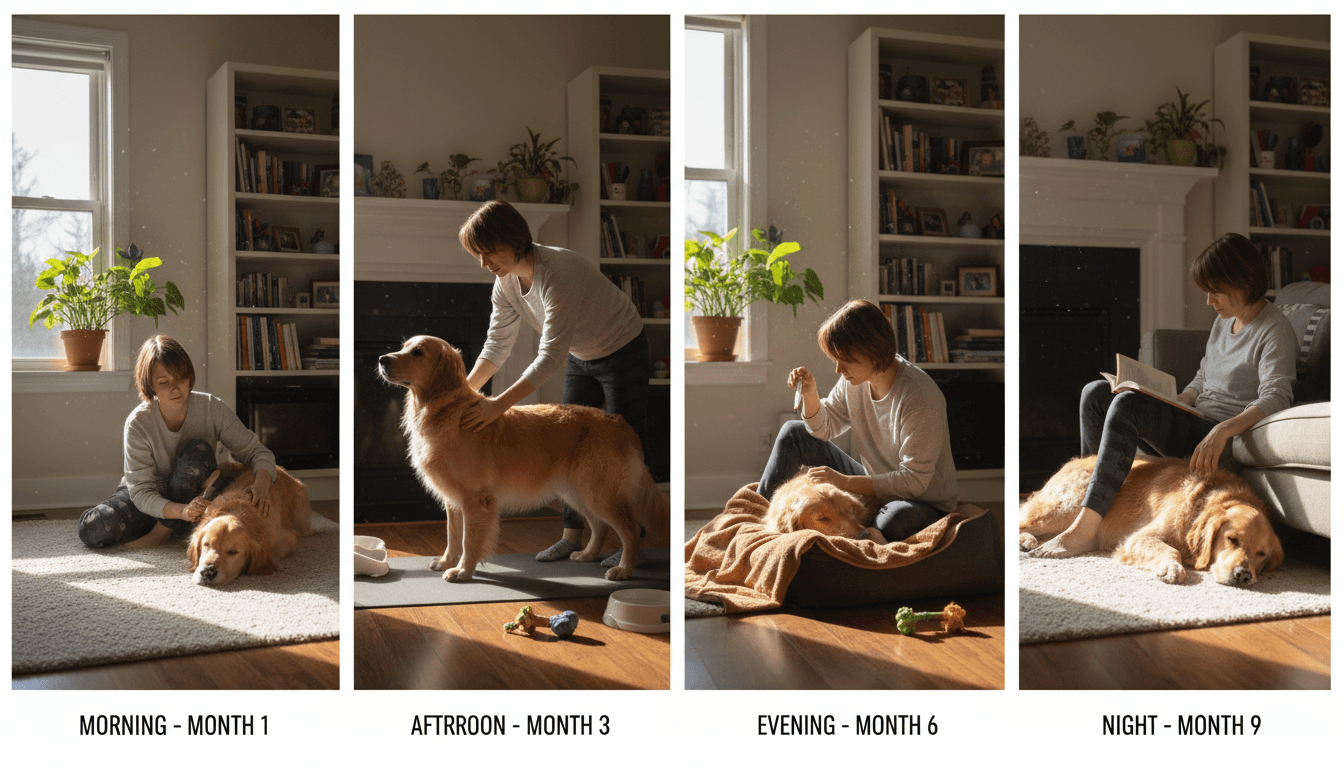
Aging dogs show a stronger preference for their primary caregiver, increased need for predictability, and more subtle communication signals. Cognitive decline can intensify dependency and attachment behaviors, making continuity of care especially critical for older companion animals.
Mutual Benefits of the Bond
For dogs: emotional security, stress regulation, and a stable social environment. For humans: reduced cortisol, improved emotional well-being, and a sense of purpose and routine. Disrupting this mutual system causes measurable harm to both parties.

When Attachment Becomes Dysregulated
Inconsistent caregiving or abrupt separation can lead to dysregulated attachment - excessive distress, behavioral problems, and heightened stress responses. Older dogs are particularly vulnerable due to reduced adaptability and increased dependence on established routines and caregivers.
Evidence-based animal welfare policy
Rosie's Law draws on extensive peer-reviewed research demonstrating how courts can better protect companion animals in custody disputes through scientific understanding of attachment and behavior.
200+
Peer-reviewed studies
Scientific research on animal attachment, behavior, and custody outcomes informing HB4540.
30+
Years of research
Decades of academic work establishing the link between caregiving history and animal well-being.
15+
States advancing similar law
Companion animal custody reforms gaining momentum across the United States.
6
Research pillars
Core academic foundations supporting modern companion animal custody considerations.
Researchers and professionals support HB4540
Leading experts in animal behavior, family law, and custody practices affirm the scientific foundation of Rosie's Law.
The research on animal attachment is compelling. Courts should have the ability to consider a pet's welfare and the caregiving bond when making custody decisions.

Dr. Katherine Wells
Animal Behavior Researcher, University of Illinois
HB4540 reflects what we know from decades of behavioral science. Companion animals form genuine attachments, and those relationships deserve consideration in family law.

Dr. James Mitchell
Professor of Behavioral Science, Northwestern University
This legislation modernizes how we approach pet custody. The bill is grounded in solid research and addresses a real gap in current law.

Sarah Chen
Family Law Attorney, Chicago Bar Association
The peer-reviewed evidence supporting animal cognition and emotional bonds is robust. Rosie's Law puts that science into practice where it matters most.

Dr. Marcus Rodriguez
Director of Animal Studies Program, DePaul University
Courts need tools to make decisions that account for animal welfare. This bill provides exactly that, backed by evidence we've validated in research.

Dr. Lisa Anderson
Veterinary Behaviorist and Research Fellow, Illinois Animal Welfare Foundation
Tameer Siddiqui has built this initiative on a foundation of real science. HB4540 reflects our best understanding of animal cognition and human-animal bonds.

Dr. Henry Park
Research Director, Midwest Legal Innovation Institute
Questions about the science
Learn how peer-reviewed research shaped HB4540 and why it matters for custody decisions.
What research supports HB4540's approach to animal custody?
HB4540 is grounded in decades of peer-reviewed studies on animal attachment, behavioral science, and welfare. The bill draws from over 100 research papers examining how caregiving history affects companion animals and why courts should consider these factors in custody disputes.
How does attachment research apply to companion animals?
Attachment science shows that companion animals form strong bonds with their primary caregivers. When separation occurs, animals experience measurable stress and behavioral changes. Courts recognizing this science can make decisions that prioritize animal welfare and reduce harm.
Why do courts need scientific evidence in animal custody cases?
Courts traditionally treated animals as property without considering emotional bonds or welfare impacts. Scientific evidence demonstrates that animal well-being depends on continuity of care. Using research ensures decisions are based on documented facts, not assumptions.
What makes HB4540 different from current Illinois custody law?
Current law doesn't require courts to consider caregiving history or animal well-being. HB4540 modernizes this by allowing judges to review the science on attachment and behavioral impact, making decisions that protect animals and reflect evidence-based practices.
How many states have adopted similar animal custody approaches?
Several states have moved toward considering animal welfare in custody disputes. HB4540 positions Illinois as a leader in applying peer-reviewed science to animal law, aligning with emerging best practices across the country.
Where can I read the full research behind HB4540?
Rosie's Law provides detailed materials on the scientific foundation of HB4540. Visit the research pillars section on this page or contact us for access to peer-reviewed citations and expert testimony supporting the bill.
Need more details?
Get in touch with Rosie's Law to discuss the research or learn how to support this evidence-based legislation.

Access the Full Research or Get Involved Today
Review the complete peer-reviewed research underlying HB4540, connect with Rosie's Law, or learn how you can support modernized animal custody law in Illinois.